
Flying Ants vs Termites: How to Tell the Difference Before They Damage Your Home
Written by: MidSouth Termite & Pest Control Team
Serving Columbia, SC since 2004
4.8-star rated pest control professionals
The difference between flying ants vs termites matters. And when termites are involved, waiting too long can give them more time to damage wood, flooring, and crawlspaces.
Flying ants and termites can look similar at a quick glance. Both can swarm. Both may appear near windows, doors, lights, or exterior walls. Both may show up suddenly in large numbers.
But there are clear differences if you know what to look for.
How to Tell If You Have Flying Ants or Termites
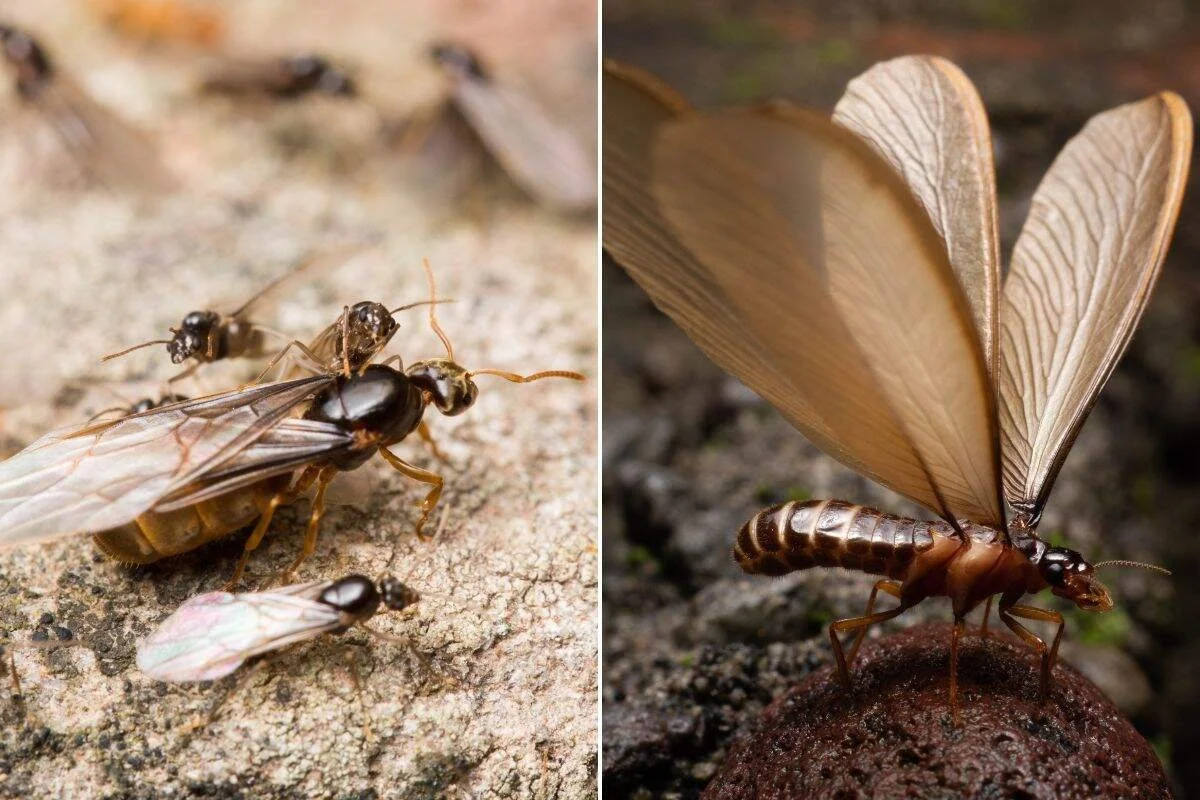
Antennae
One of the easiest differences to spot is the antennae.
Flying ants usually have bent or elbowed antennae
Termite swarmers usually have straight antennae
If you can safely take a close-up photo, this can be one of the first details to compare with a professional.
Body Shape
Flying ants have a more obvious body shape. Their waist is narrow and pinched, which makes the body look segmented.
Termites have a thicker, straighter waist. Their bodies look more uniform from front to back.
In simple terms:
Flying ants look more “pinched.” Termites look more straight.
Wings
Flying ants usually have front wings that are longer than their back wings.
Termite swarmers usually have two pairs of wings that are about the same length. Their wings may also look longer than the body and can appear fragile.
If you find a pile of similar-looking wings near a windowsill, door, light fixture, tub, sink, or baseboard, that can be a more concerning sign.
What Did You Find?
The situation matters just as much as the insect.
Here are common scenarios homeowners notice and if they are signs of termites.
Winged Insects Near Windows or Doors
Winged insects near windows or doors can be flying ants or termite swarmers. Both may be attracted to light, and both can show up suddenly.
If you see them indoors, take photos before cleaning them up. Try to capture the body shape, wings, antennae, and where they appeared.
Piles of Discarded Wings
Discarded wings are one of the biggest clues to watch for.
Termite swarmers shed their wings after swarming. If you find piles of wings that are all roughly the same size, especially near windowsills, door frames, bathrooms, light fixtures, or baseboards, that may be a warning sign.
Do not just sweep them away and move on.
Take a photo first. If possible, save a sample.
Bugs Coming From Walls, Floors, Trim, or Baseboards
Winged insects coming from structural areas are more concerning than insects flying around outside.
If bugs appear to be coming from:
walls
floors
trim
baseboards
door frames
crawlspace areas
that could suggest activity inside or very close to the structure.
Mud Tubes Near the Foundation or Crawlspace
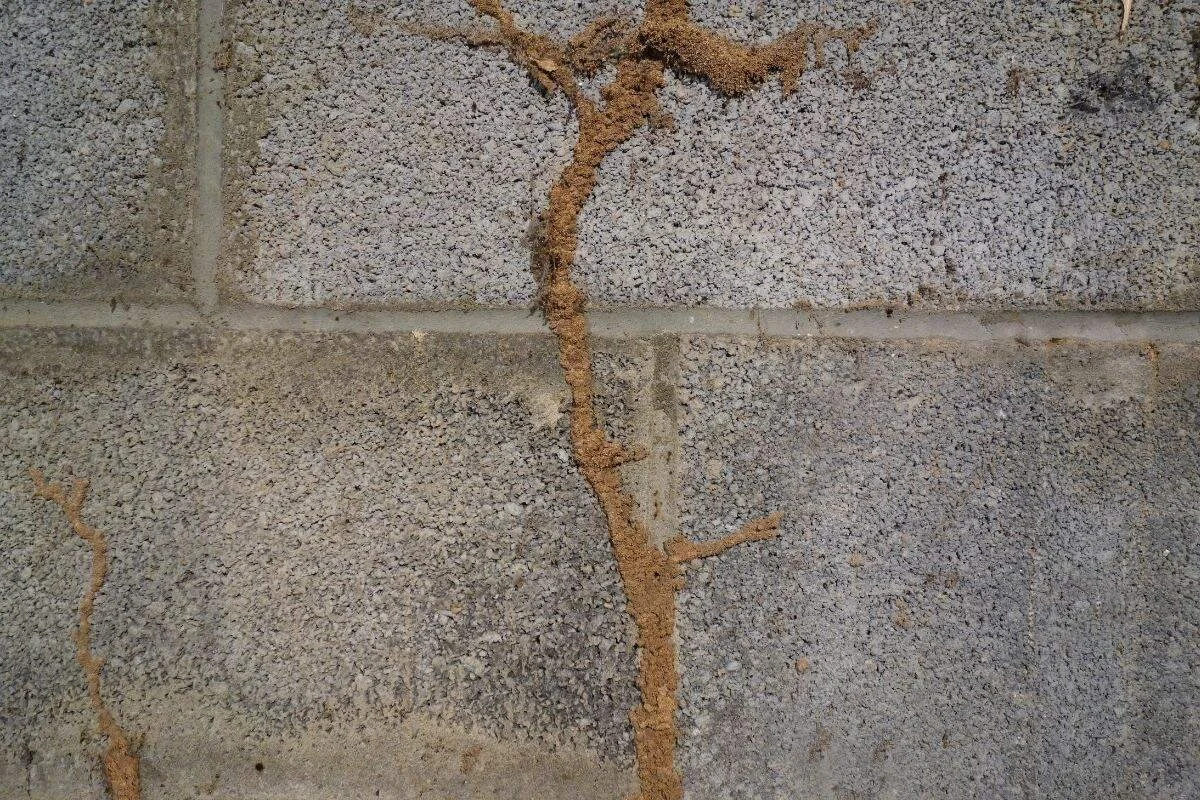
Mud tubes are a strong termite warning sign.
Check areas like:
foundation walls
crawlspace walls
garage walls
exterior perimeter
utility entry points
Mud tubes can help termites travel while staying protected. If you find them, schedule a termite inspection.
Sawdust-Like Debris or Damaged Wood
Sawdust-like debris may not always point to termites. It could also suggest carpenter ants or another wood-damaging pest.
Winged carpenter ants do not eat wood like termites, but they can hollow it out for nesting. That activity can still be a serious problem.
If you find piles of discarded wings, mud tubes, damaged wood, or swarmers inside your home, it is time to schedule a termite inspection.
The Problem With Termite Swarmers
Termite swarmers are reproductive termites. Their job is to leave an existing colony and start new colonies.
Seeing them indoors is especially concerning because termites can be active behind walls, under flooring, in crawlspaces, and around foundations before homeowners notice obvious damage.
That is what makes termite swarmers so important.
They could be a visible warning sign of a hidden problem.
What About Carpenter Ants?
Carpenter ants deserve their own mention because they are often part of the flying ants vs termites conversation.
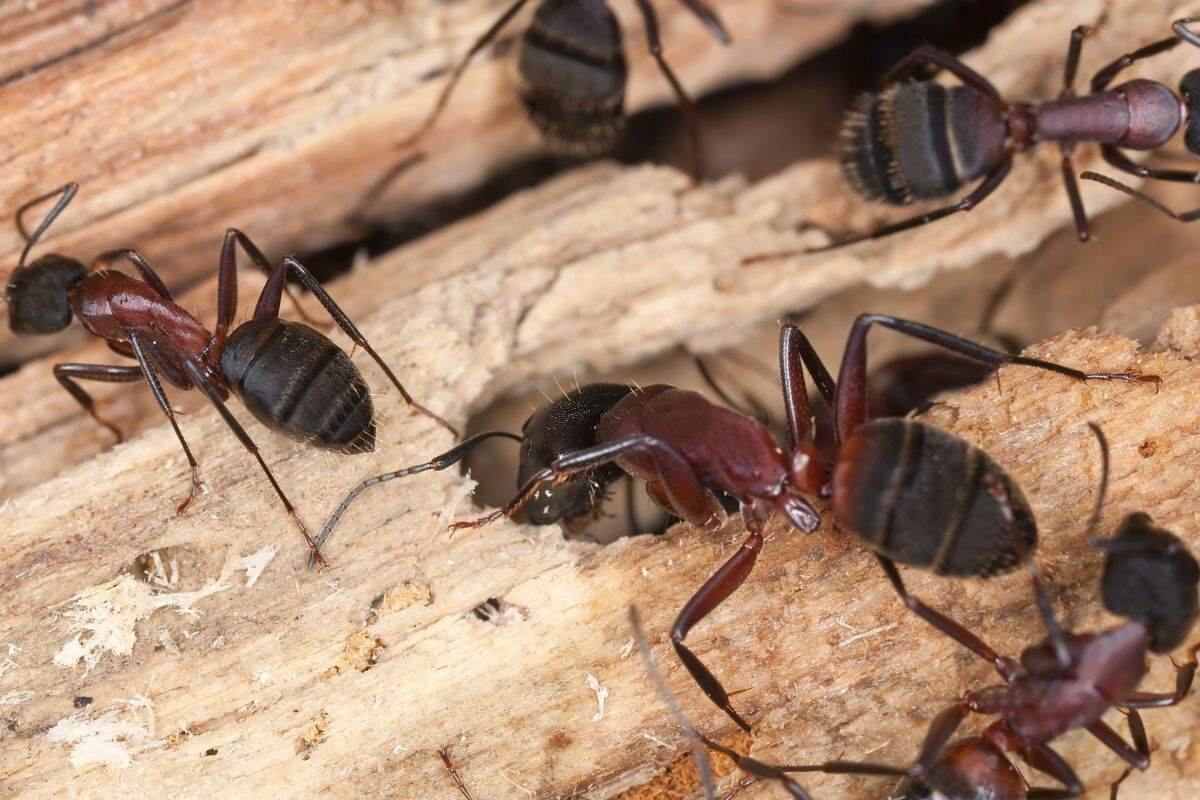
Carpenter ants can have wings during swarm season, which makes them easy to confuse with termites. Unlike termites, carpenter ants do not eat wood. Instead, they excavate wood to create galleries for nesting.
Carpenter ants are often associated with moisture-damaged wood. If you are seeing winged ants, sawdust-like debris, or activity around damp wood, you should consider professional ant control services.
Why This Matters in South Carolina
In South Carolina, guessing wrong can get expensive.
Homeowners in Columbia, Lexington, Kershaw County, Greenville, Spartanburg, and surrounding areas should be especially careful when winged insects appear indoors or near structural areas.
Local identification matters because pest control is not the same everywhere. South Carolina homes deal with regional weather patterns, crawlspace moisture, termite activity, and ant species that may require different treatment strategies.
What to Do If You Have Flying Ants or Termites
1. Do Not Spray or Wipe Everything Away Immediately
It is tempting to spray first and ask questions later.
But if you destroy the evidence, identification becomes harder.
Before cleaning everything up, take photos or collect a sample if you can do so safely.
2. Take Clear Photos
Try to capture:
wings
the body
the antennae
where the insects were found
any mud tubes or damaged wood nearby
3. Look for Discarded Wings
Check:
windowsills
door frames
bathtubs
sinks
vents
light fixtures
baseboards
4. Check for Mud Tubes
Look around:
foundation walls
crawlspaces
garages
exterior walls
utility entry points
5. Note When and Where It Happened
These details matter.
Write down:
where you saw the insects
whether they were indoors or outdoors
time of day
whether it happened after rain
whether there was moisture nearby
whether this has happened before
6. Schedule a Professional Inspection
Flying ants vs termites can be difficult to identify without experience.
A professional can determine whether you are dealing with ants, carpenter ants, termites, or another pest. Then recommend the next step.
How MidSouth Can Help
MidSouth Termite & Pest Control, Inc. helps homeowners identify what they are dealing with and choose the right solution for the problem.
If the issue is ants, our ant control method starts with a thorough inspection to identify trails, entry points, nesting areas, and attractants. From there, professional baiting can help target the colony at its source, while exterior treatments help protect the home’s perimeter and reduce re-entry.
If the issue is termites, a professional termite inspection can help determine whether your home has an active termite risk and what needs to happen next.
MidSouth Termite & Pest Control, Inc. serves homeowners across Columbia, Lexington, Kershaw County, Greenville, Spartanburg, and surrounding South Carolina communities.
Call us at (803) 380-8161 or book a FREE estimate online today.
Frequently Asked Questions
How can you tell flying ants and termites apart?
Look at the antennae, waist, and wings. Flying ants have bent antennae, a narrow waist, and front wings that are longer than the back wings. Termites have straight antennae, a straight waist, and wings that are the same length.
Do termites have wings?
Yes. Reproductive termites, also called termite swarmers, have wings when they leave the colony to start new colonies. After swarming, they may shed those wings.
Why am I finding wings near my windows?
Winged insects are often attracted to light. If you are finding discarded wings near windows, it could be from termite swarmers or flying ants. The wing size, body shape, and other signs around the home can help with identification.
Are flying ants dangerous to my home?
Some flying ants are more of a nuisance, while others, like carpenter ants, can be associated with wood damage. Even if the insects are ants, visible activity may point to a colony nearby.
What are carpenter ants?
Carpenter ants are ants that excavate wood to create nesting galleries. They do not eat wood like termites, but they can still damage wood and are often associated with moisture-damaged areas.
Should I spray flying ants or termites?
It is better to take photos or save a sample before spraying or cleaning everything up. Spraying may destroy helpful evidence. If the issue is ants, some sprays can cause colonies to scatter.